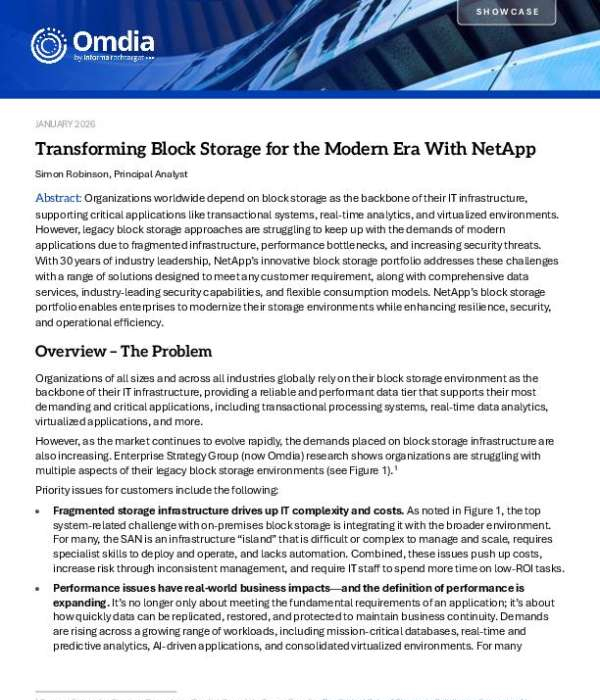
NetApp has spent 30 years in enterprise storage and has reshaped its portfolio to address today’s mix of on-premises, hybrid, and cloud workloads. A few aspects stand out:
1. A unified data platform, not just point products
- All-flash SAN (ASA) for mission-critical block workloads that need ultra-low latency and high IOPS.
- Unified platforms (AFF and FAS) that support block, file, and object on the same system, helping reduce infrastructure silos.
- Cloud block services available across major hyperscalers, so you can extend the same data services into the cloud.
All of these are powered by the ONTAP operating system, which gives you consistent data services, performance, and management across deployment models.
2. Built-in security and resilience
- Immutable snapshots and integrated ransomware protection to support rapid recovery.
- AI-driven anomaly detection to spot unusual behavior early.
- Zero-trust architecture and end-to-end encryption to protect data on premises, in the cloud, or in hybrid environments.
Given that 99% of ransomware victims lose data and nearly half recover only half or less, embedding this level of resilience in the storage layer is becoming a core requirement.
3. Consistent data management and observability
- Application-consistent recovery and broad support for key databases such as Oracle, Microsoft SQL Server, and SAP.
- Data Infrastructure Insights for observability across SAN infrastructure, helping you optimize performance and troubleshoot faster.
- Integrated data services for protection, recovery, business continuity, and intelligent data management.
NetApp’s approach is to reimagine block storage as part of an intelligent data infrastructure, so you can support everything from high-performance workloads to cost-optimized capacity tiers with a single, coherent strategy.



 Sign in with LinkedIn